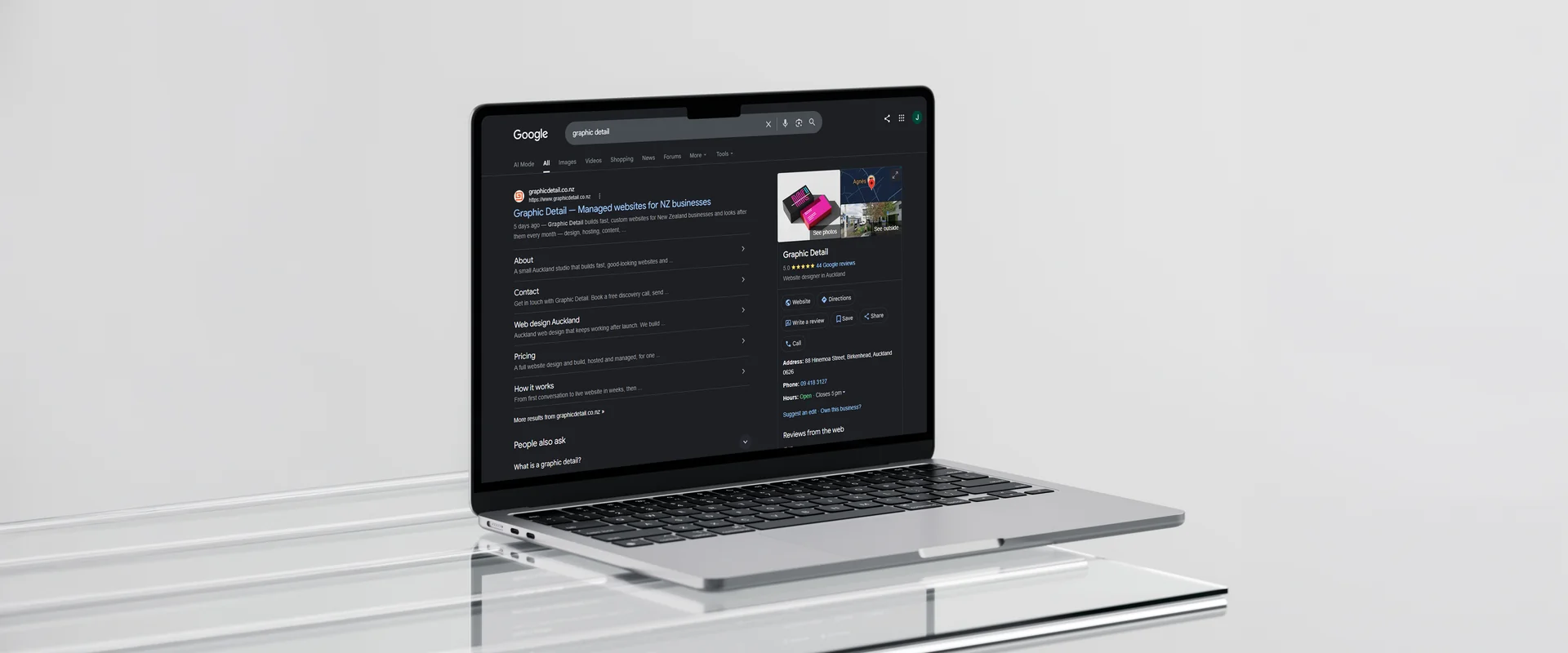
For most local businesses, the honest truth is that more people make their decision from the little map listing at the top of Google than from clicking through to the actual website. Someone searches "plumber near me," sees three or four results with photos, star ratings, and opening hours, and makes a call before ever reaching a homepage.
Your Google Business Profile has become the first, and sometimes only, impression your business makes. Most businesses set it up once and never touch it again.
Why the map listing wins the moment
Local search results are built for speed. Someone with an immediate need — a leak, a broken window, an urgent quote — isn't browsing, they're comparing three listings side by side and picking one within seconds. That comparison happens almost entirely inside the profile: photos, review count and rating, recent posts, and whether the listing looks actively maintained.
A polished website with a stale, half-finished Google Business Profile loses to a mediocre website with an active, well-reviewed profile, almost every time, because the decision is often made before the website is ever opened.
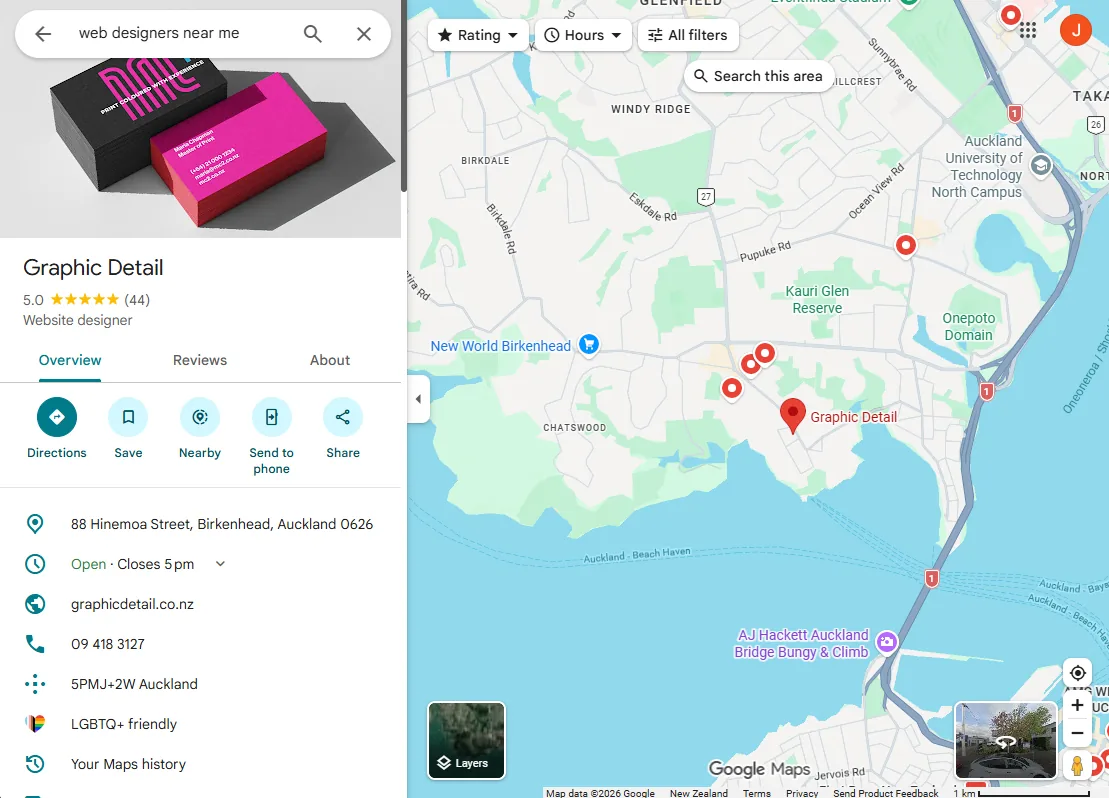
What an active profile actually looks like
It's less about polish and more about visible signs of life:
- Recent, genuine photos — not the same five images from setup, three years ago.
- A steady stream of reviews, and visible, thoughtful replies to them (including the occasional negative one, handled well).
- Regular posts or updates, even simple ones, showing the business is currently operating and paying attention.
- Accurate, current hours, especially around public holidays — nothing erodes trust faster than turning up to a listed "open" business that's closed.
- Complete category and service information, so Google (and increasingly AI tools) can match you to the right searches.
The connection to your actual website
Your Google Business Profile and your website aren't separate systems, they're two doors into the same business, and they need to agree with each other. Mismatched business names, addresses, or phone numbers between the two actively hurt both — it signals inconsistency to Google and to AI search tools that are increasingly cross-referencing this exact information before recommending a business.
Treat the two as one system: what's true on your website should be true on your profile, updated at the same time, every time.
Why this gets neglected
Google Business Profile sits in an odd gap — it's not really "the website," so web teams often leave it alone, and it's not really "marketing" in the traditional sense, so it falls off most people's radar entirely. That gap is exactly why so many local businesses have a listing that hasn't been meaningfully touched in years, which could be costing them the exact customers who were closest to calling.
Stop leaving your best local leads on the table
Our Google Business Profile management covers posts, photos, reviews, and replies, kept consistent with your website, so the first impression people get matches the business you actually run.
Learn moreCommon questions
How often should I update my Google Business Profile?
At least monthly — new photos, a post or two, and prompt replies to any new reviews. More frequent activity signals to Google that the business is genuinely active.
Does Google Business Profile matter if I already have a good website?
Yes, arguably more. For local, decision-now searches, many customers never leave the map listing before choosing who to call. A great website with a neglected profile still loses those customers.
What's the fastest way to improve a Google Business Profile?
Start with photos and reviews — they're the two elements customers scan first, and both are usually the most out of date. Replying to existing reviews, even old ones, is also a quick, visible signal of an active business.