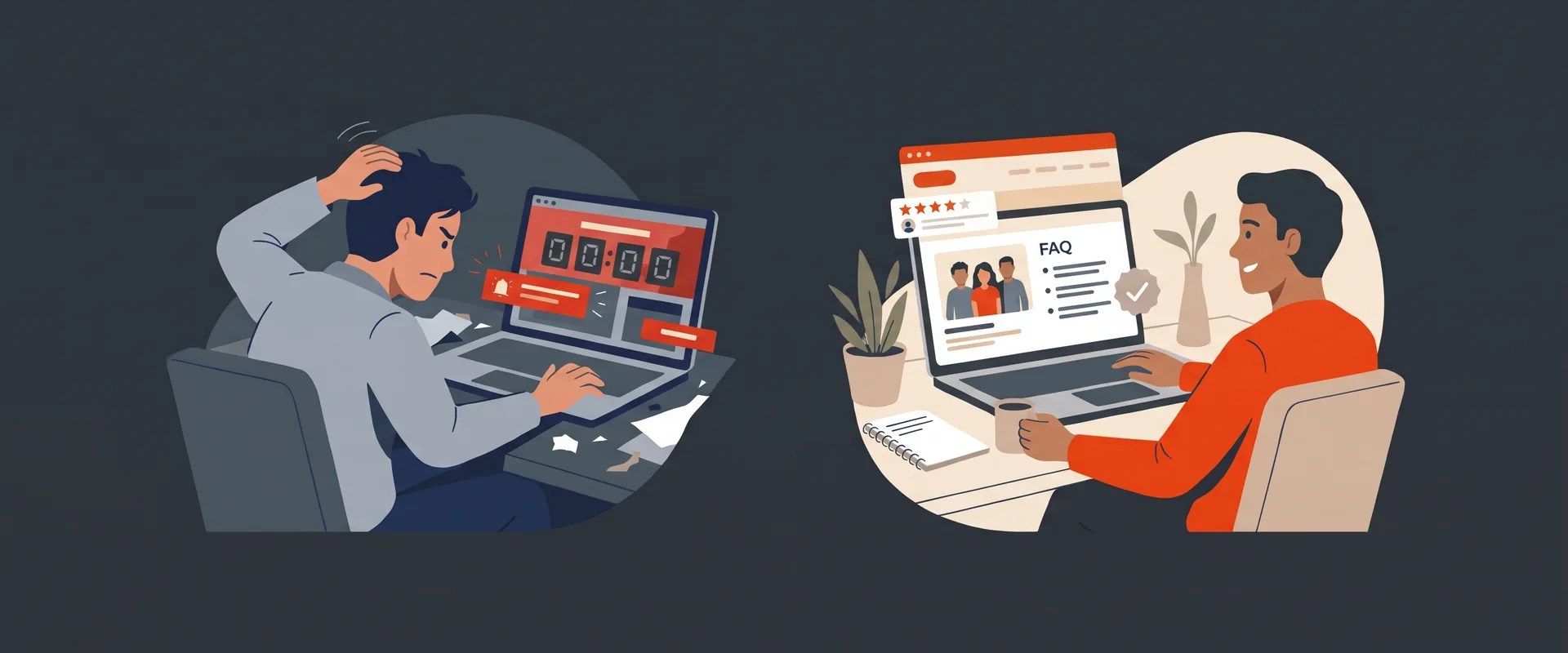
References in the recent Commerce Commission's refreshed 2025/26 enforcement and compliance priorities highlight a growing trend towards hard sales conversion by New Zealand websites.
As General Manager of Graphic Detail, an Auckland digital studio that builds and manages websites for New Zealand businesses, I believe Kiwi businesses risk undermining customer trust when website conversion tactics shift from helping people make decisions to pressuring them into buying.
The Commerce Commission identified online sales conduct as an enforcement priority, and this should act as a prompt for some businesses to examine how their websites influence customers.
Misleading scarcity claims and social proof, fake reviews, drip pricing and subscription traps may result in short term gains, but long term loss.
In Short
The Commerce Commission has made online sales conduct an enforcement priority. Pressure tactics like fake scarcity, misleading social proof and drip pricing may lift short-term conversions, but they cost the long-term trust that brings customers back. A website converts best when it gives people enough evidence to decide for themselves. Six areas are worth reviewing: who is behind the business, evidence for claims, credible feedback, what happens when things go wrong, honest answers to hesitant questions, and clear terms.
Helping a customer decide, or pressuring them to
There is a place for conversion techniques, but businesses should distinguish between helping a customer make a decision and creating pressure to secure an immediate sale.
There is nothing wrong with wanting a website to convert. The question is how you achieve that conversion.
You can use copy, positioning, testing and evidence to make it easier for somebody to understand what you offer and decide whether it is right for them. That is very different from creating pressure through a countdown or telling somebody they are about to miss out when that isn't genuinely the case.
A website should help people reach a decision rather than push them towards one.
Businesses can become focused on conversion rates without considering the effect some techniques have on credibility. If you want a customer to stay with your business, come back and buy again, long term trust is a greater priority than the first transaction. A business focused only on getting the sale can lose sight of that.
Conversion and trust don't need to compete
Website conversion and trust do not need to compete with each other. Something as straightforward as showing the person in the business that a prospective customer will speak to can help. So can explaining what happens after an enquiry, providing evidence for claims and making it easy to understand what happens if a purchase does not meet expectations.
A website establishes trust less through saying 'trust us' and more by giving people enough evidence to reach that conclusion themselves. If you make a claim on your website, a useful question is: why should I believe you? The next sentence, photograph, case study, statistic, review or credential should help answer that.
If you're concerned that a less aggressive sales approach will reduce conversions, consider the value of repeat customers. The aim should not necessarily be to make one sale. It should be to build enough trust that the customer is comfortable coming back.
Instead of asking only how we get somebody to buy now, you start asking what information they need to make a decision and what will give them confidence in the business.
Six areas of your website to review
I'd suggest reviewing these six areas of your website.
1. Show who is behind the business
Names, photographs, contact information and details about who a customer will deal with reduce anonymity.
2. Provide evidence for claims
Support your claims with relevant case studies, project examples, qualifications, independent reviews, customer experiences or other evidence.
Generic statements about quality or service give people little information. Evidence gives them something they can assess for themselves.
3. Make customer feedback credible
Encourage customers to leave independent reviews and, where appropriate and with permission, share photographs showing the product in use.
Customer-generated content has value because it comes from an actual customer experience rather than the business making another claim about itself.
4. Explain what happens when things go wrong
Returns, shipping, warranties and guarantees should be easy to find and understand. Explain how customers can contact you and what process applies if a product arrives damaged or does not meet expectations.
Buying online involves uncertainty because you cannot always inspect the product first. Being clear about returns, delivery, warranties and who to contact if there is a problem removes some of that uncertainty.
5. Answer the questions customers may hesitate to ask
A useful FAQ section can address costs, limitations, processes and common concerns rather than focusing only on selling points.
Transparency includes the difficult questions. If there is something customers regularly want to know before buying, put the answer on the website rather than making them search for it.
6. Make terms clear
Terms and conditions, privacy information, shipping policies and other conditions should be accessible and written so customers can understand what they are agreeing to.
Trust comes from being clear from the outset about how the transaction works.
Beyond the hard sell
The Commerce Commission's attention to online sales practices gives businesses a reason to reconsider website design that relies on pressure.
Regulation creates a reason to look at whether a sales technique is accurate and compliant, but businesses should also ask whether it supports the type of customer relationship they want.
If you want repeat business and customer loyalty, focus less on the hard sell and more on giving people the information and evidence they need to trust you.
Build a website people can trust
Our Foundation plan covers the custom design, copy and ongoing care that put evidence, clear terms and real people at the centre of your website, with nothing left waiting on you to find the time.
See how it worksCommon questions
What counts as a pressure tactic on a website?
Examples named in this article include misleading scarcity claims and social proof, fake reviews, drip pricing and subscription traps. A countdown or an "about to miss out" message is a problem when it isn't genuinely true.
Will a less aggressive approach reduce my conversions?
It doesn't need to. Conversion and trust can work together: clear copy, positioning, testing and evidence make it easier for people to decide. The value of a customer who comes back and buys again is also worth weighing against a single pressured sale.
Where should I start reviewing my website?
Pick any claim on your site and ask: why should I believe you? Then check whether the next sentence, photo, case study, statistic, review or credential answers that. The six areas above give you a checklist to work through.