For years, you were told that being able to manage your own website was an advantage. Your developer built the site, gave you access, and showed you how to make changes, leaving you in control.
The problem is that having control doesn't mean you have the time to use it.
In Short
Most businesses can edit their own website, but almost none of them do. At Graphic Detail, fewer than one in ten clients regularly update their own site, even though every one of them has access. The fix isn't more access, it's someone staying responsible for keeping the site accurate, especially now that AI tools are reading it too.
At Graphic Detail, we manage more than 150 websites, but only a small percentage of those clients regularly make their own changes, and even then, "regularly" often means once every couple of months. Most of the businesses we work with have the ability to update their site and simply don't use it.
Having access to update your website isn't the same as actually keeping it current.
Your website may no longer represent your business
If you haven't updated your website recently, there's a reasonable chance something on it is no longer accurate. Your services may have changed. Staff may have joined or left. Contact details, locations, pricing, processes, or the way you describe the business may have moved on. The website often hasn't.
That can affect how prospective customers see your business, because they may be making decisions using information that is months or even years out of date.
AI adds another consideration. People are increasingly using AI tools alongside search to research businesses, compare providers, and decide who to contact. Your website is therefore doing more than communicating with people who visit it directly. It contributes to the information available online about who you are and what you do. If that information is outdated, incomplete, or inconsistent, you're making it harder for customers and digital systems to establish a clear, current picture of your business.
Consistency goes beyond your website
Your website also doesn't exist in isolation. If it describes your business one way, your Google Business Profile says something different, and information elsewhere online tells another story, there's no clear version of your business for customers or digital systems to work from.
Your services, locations, contact information, and business description should be current and consistent. You also need recent evidence of what you do, whether that's case studies, completed projects, articles, news, or other useful content.
This changes the role of the business website. Building a site, making it editable, and assuming somebody within the business will keep it current isn't enough. The person responsible for the website is usually responsible for several other things as well. Access gives you the ability to make an update. It doesn't give you the time, content, or specialist knowledge to identify what needs changing and make sure it happens.
Three things to check on your website
There are three simple checks you can make now.
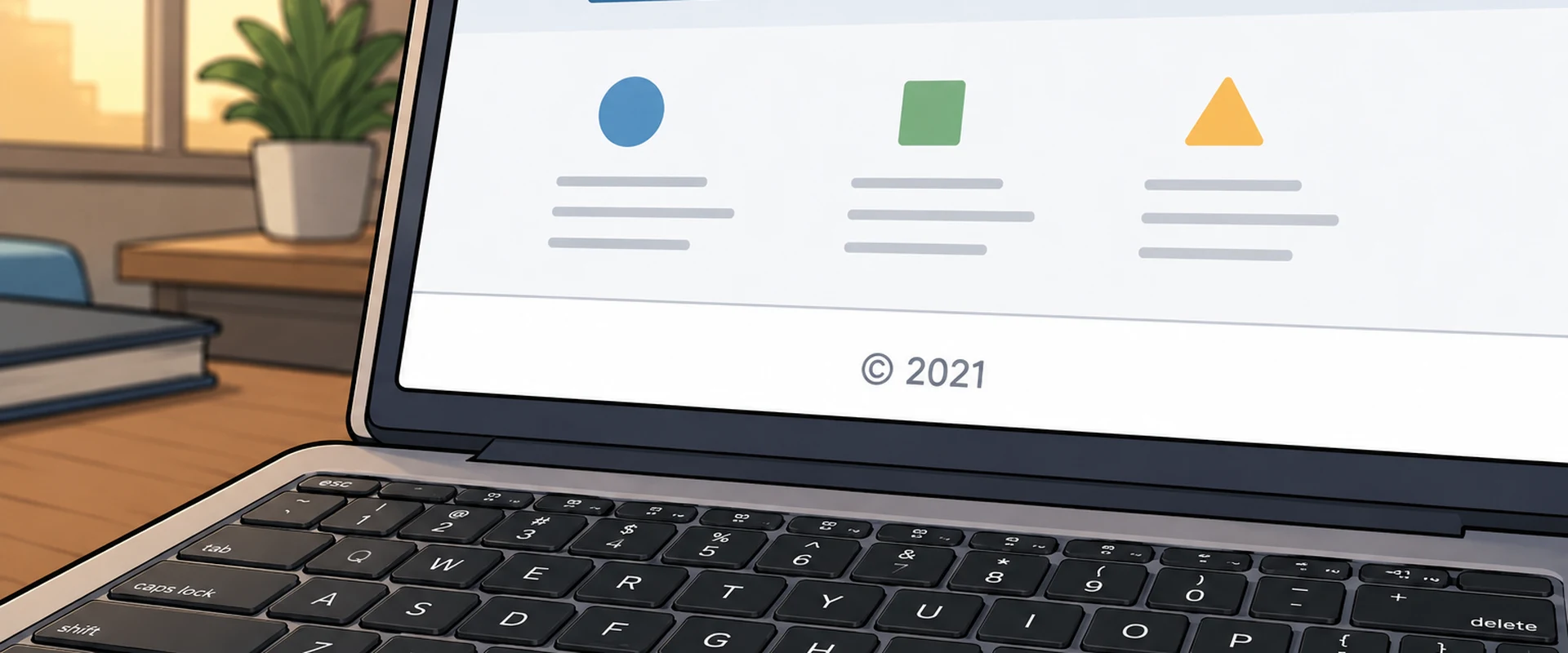
- Look at the copyright year in the footer. If it still says 2021, ask yourself what else hasn't been updated since then.
- Talk to your developer about whether an llms.txt file is appropriate for your website. It's an emerging approach for providing structured information about a website and business that may help AI systems understand its content.
- Compare the core information on your website with your Google Business Profile and other places where your business appears online. Check your services, locations, contact details, and description, and correct any inconsistencies.
Perhaps you shouldn't manage your website
This is why some businesses are returning to a subscription model, where website development, maintenance, updates, and content are handled for an ongoing monthly fee.
AI is making that model more practical, because an experienced developer can use it to reduce the time required for parts of the work, allowing more ongoing development and maintenance to be included within the subscription. The important part isn't AI itself. It's the expertise behind it: knowing what needs attention, what information is useful, and how to use AI efficiently while retaining human oversight.
Instead of paying for a website, receiving the login details, and trying to find time to maintain it yourself, you're paying for somebody to remain responsible for it. Your website can then change as your business changes, rather than gradually becoming outdated until the next rebuild.
Let someone else stay responsible for it
Our Foundation plan includes ongoing content, consistency checks, and monthly maintenance as part of the subscription, so nothing is waiting on you to find the time.
See how it worksCommon questions
Do I need to be able to edit my own website?
Not really. Access is useful for the small number of clients who genuinely want to make their own changes, but for most businesses, the time and specialist knowledge to keep a site accurate matters far more than having a login. A managed arrangement covers that without relying on anyone finding the time.
What is an llms.txt file?
It's an emerging, structured way of describing a website and business in plain text, intended to help AI tools understand its content more reliably. It's not yet a universal standard, but it's a low-cost, sensible step for a business that wants to be described accurately by AI systems.
How do I check if my Google Business Profile matches my website?
Put your website and your Google Business Profile side by side and compare your services, locations, contact details, and business description line by line. Small mismatches, an old phone number, a service you no longer offer, are the most common issue, and the easiest to fix once you've actually spotted them.